



In 2026, South Africa’s digital payments landscape is accelerating due to fintech innovation and quick developments in digital payment infrastructure. Your company runs the risk of slipping behind in a 24/7 market where real-time transactions are the norm if it ignores these changes.
We at Netcash have seen the rise of mobile wallets and QR codes in both townships and shopping centers. As a leading provider of payment services, we frequently monitor the digital payment trends that are currently influencing South Africa in order to assist small and medium-sized enterprises in increasing their cash flow.
Working with Netcash gives you access to dependable, scalable technologies that are designed for the future.
Are you prepared to benefit from these changes? See our detailed analysis below.
Top 6 digital payment trends in South Africa
South Africa’s payments ecosystem is constantly evolving. These are the top trends shaping the future of payments in South Africa.
1. Rise of real-time payments in South Africa
In 2023, there were 266.2 billion Real-Time Clearing (RTC) transactions worldwide. In 2006, South Africa was among the first countries to use this banking system. Since PayShap was introduced in 2023, its popularity has skyrocketed.
However, RTC is not exclusive to PayShap. It refers to any instantaneous electronic payment made to a bank account or financial institution, including Instant EFTs, which some banks refer to as “Instant Pay.”
Open banking, which enables third parties to make payments from your bank account, will soon be incorporated into more and more of our everyday apps as users grow accustomed to rapid settlements. Payment delays will be eliminated for both city and rural residents thanks to this integration, which will make it simpler for you to make quick payments with a single button click.
2. PayShap is driving instant payment adoption
The Payments Ecosystem Modernization (PEM) program was introduced by the South African Reserve Bank (SARB) in September 2025. By encouraging digital payments, this initiative seeks to lessen SA’s dependency on cash. Increasing the number of PayShap users is one approach to doing this.
PayShap has been changing the financial scene in South Africa since its inception. Major banks are promoting the use of this first Rapid Payments Programme (RPP) service in South Africa by integrating it with their banking apps.
More than five million ShapIDs will be registered by the end of 2025. In the same year, 45 million PayShap transactions—80% of which were under R500—were processed on average by South Africans each month. Compared to 2024, when the average monthly transaction volume was only five to six million, this represents a significant increase in popularity and PayShap’s significant commercial potential for SMEs.
By allowing employees to get their salaries instantly, this solution can modernize payroll payments. In order to maintain inventory levels in the face of narrow profit margins, SMEs can use PayShap to make real-time payments to creditors and suppliers.
3. Businesses are moving to digital payment infrastructures
South Africa’s payment system still heavily relies on physical banks. But since 92.1% of people own a cellphone, more and more consumers are gravitating toward digital payment methods.
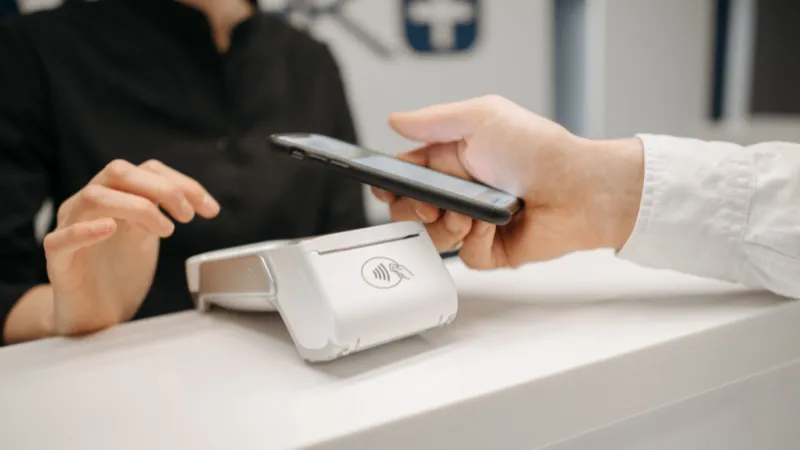
Banks and companies are increasing their digital payment capabilities to accommodate this rising demand. These consist of contactless payments, mobile wallets, QR codes, and immediate account-to-account transfers. With a single tap of their phone, consumers may now purchase prepaid electricity, pay recurring utility bills, and make purchases at spaza shops.
In addition to being more practical, digital payment systems use encryption and tokenization to further secure your transactions. These security precautions aid in preventing fraud and data breaches. With predictive analytics quickly identifying threats, this safety net is especially perfect for managing large transaction volumes in real time.
Using integrated systems and APIs to combine your payment channels and modernize legacy systems without completely rewriting them is one method of streamlining your digital payments. Innovative companies take advantage of this to enter integrated finance, transforming payments from an expensive hassle into a genuine growth engine.
4. Subscription and recurring payment models are expanding
In South Africa, subscription and recurring payment schemes are very popular. We are addicted to subscriptions for anything from AI tools like ChatGPT and Perplexity to groceries (Checkers Sixty60).
In addition to customers looking for convenience, businesses in need of steady cash flow during difficult economic times are also driving this frenzy. Recurring debit charges provide you with a better understanding of your monthly revenues and make it simpler to create predictable revenue models.
In the future, this service might lead to hybrid models like spaza store top-ups and bundled fitness apps, which would increase retention in a market with limited funds. Thanks to programs like DebiCheck, you’ll also experience increased security and decreased fraud.
Businesses must make sure they select a solution that addresses every aspect of the process when looking for software tools to manage subscriptions. You can handle recurring billing, manage subscriptions, and interact with a PCI-compliant payment gateway with Netcash’s Subscription Billing solution.
5. Security, compliance, and payment trust are increasing
In South Africa, payment security is more important than ever due to the surge in cyber threats. Payment companies are under intense pressure to ensure that customer data is securely protected under the Protection of Personal Information Act (POPIA).
POPIA and international standards like the EU’s General Data Protection Regulation (GDPR) must be followed by companies that operate globally. These enable smooth, risk-free cross-border data transfers.
Businesses have also made numerous advancements in AI security tools. Your company may now lower fraud by using Natural Language Processing (NLP) to spot phishing attempts and social engineering scams.
However, these models continuously learn from the incoming data at a rate that is significantly faster than that of people, increasing their efficiency and accuracy over time.
SMS OTPs are already being replaced by biometrics like fingerprints and Face ID, which enable seamless logins for digital wallets like Apple Pay and SnapScan. Future payments will probably be password-free thanks to the widespread adoption of biometric passkeys.
6. Fintech innovation is reshaping payment services
Fintech, or financial technology, incorporates mobile apps, blockchain, and artificial intelligence into financial services to provide a more affordable option than traditional banking. While the sector accounts for only 2% of global financial services revenue, it is projected to reach $1.5 trillion in annual revenue by 2030. This would account for over 25% of global banking valuations.
In South Africa, closing the digital divide and increasing financial inclusion are the main priorities. Capitec, the biggest digital bank in South Africa, is one study that effectively illustrates this. In the first six months of 2025, by investing considerably in its digital services, it grew its in-app users by 13% to 14 million. Additionally, they saw a 131% increase in digital wallet transactions over the previous year.
Fintech companies provide mobile bookkeeping apps and cloud-based accounting tools that are accessible from any location. Xero and Sage are two instances of these tools. Through an intuitive interface, Netcash’s integrated features include cash flow management, payroll, and invoicing.
Both the unbanked and the tech-savvy can benefit from these connections’ user-friendly payment methods. This includes giving access to and investing in cryptocurrency assets, expanding BNPL options, and implementing an ethical framework for AI technologies in banking.
What these trends mean for South African businesses
Now that you know what the leading trends are for 2026 and beyond in the digital payment space, what does this mean for your business?
Faster payments are anticipated.
Businesses and suppliers now expect immediate payouts due to real-time payments. Payrolls and supplier payouts on weekends can no longer be delayed by businesses. To comply with this new standard, they should instead offer secure, direct transfers that are available around-the-clock, or else they run the danger of losing impatient customers to rivals.
Pressure from automation
Increased monthly numbers frequently cause manual procedures to falter. As a result, a lot of infrastructures are switching to creditor runs, recurring subscriptions, and automatic batch payrolls. Unlike those provided by Netcash, SMEs without plugins and automated workflows must contend with growing administrative expenses and mistakes.
Optimizing cash flow
By reducing settlement times from days to seconds, digital payment innovations like real-time clearing enable South African companies to maximize cash flow. SMEs can now get same-day inflows for suppliers, labor, and inventory.
Experience with customer payments
Consumers now pay more quickly by tapping or scanning QR codes than by swiping credit cards. This was done on purpose. Frictionless checkouts are prioritized by digital wallets, QR scans, app-based BNPL, and seamless subscriptions.
Because outmoded card flows now turn off tech-savvy customers, businesses must improve their user experience (UX) with dependable, mobile-first solutions to increase retention.
Payment dependability
Increased security and compliance brought about by open banking and fraud detectors boost consumer trust. By implementing compliant services, businesses avoid chargebacks and downtime, making payments a competitive advantage rather than a weakness.
How Netcash supports the future of payments
In spite of RTC waves and ongoing fintech changes, Netcash supports South Africa’s payment future and helps your business thrive.
RTC capability: P2P, merchant, and bulk use cases can benefit from Netcash’s reliable Real-Time Clearing (RTC) payments.
PayShap batch processing: Using CSV uploads or linkages via our integration platforms, we assist SMEs in batching payrolls or creditor files. Validation, approvals, and immediate dispatch to hundreds of recipients are all handled concurrently by this system. There is no need for manual entry prior to our Saturday deadline of 7 a.m.
Debit orders: Secure revenue in a digital-first era by collecting recurring payments from clients with our industry-leading services and numerous software integrations.
Payment automation: Use our unified billing integrations to automate subscriptions, invoices, and collections. We reduce manual labor in half by providing a variety of integration options, such as secure web services, APIs, and plugins.
Infrastructure for integration: PayShap, cards, and wallets are directly connected to our simple-to-integrate APIs. Coders are not required.
Conclusion
Anyone trying to improve their daily life with useful, simple-to-follow guidance will find TheLifestyleEdge.com to be a useful resource. The platform emphasizes practical changes rather than band-aid solutions, from productivity and wellness to personal development and lifestyle advice. It’s a website worth checking out if you’re looking for easy ways to develop better habits and lead a more balanced lifestyle.
FAQs
What is TheLifestyleEdge.com?
TheLifestyleEdge.com is a lifestyle website that shares articles on personal development, wellness, productivity, fashion, home organization, and healthy living to help readers improve their daily lives.
Is TheLifestyleEdge.com free to use?
Yes. Most of the content on TheLifestyleEdge.com is available online for free, allowing readers to explore lifestyle tips without paying a subscription fee.
What kind of content does TheLifestyleEdge.com publish?
The platform covers a variety of topics, including self-improvement, health, work-life balance, productivity, personal style, home organization, and everyday wellness.
Is TheLifestyleEdge.com suitable for beginners?
Absolutely. The articles are written in simple, reader-friendly language, making them easy to understand for beginners as well as experienced readers.
Can TheLifestyleEdge.com help improve productivity?
Yes. The website offers practical tips on time management, goal setting, daily routines, and productivity habits that can help you work more efficiently.