



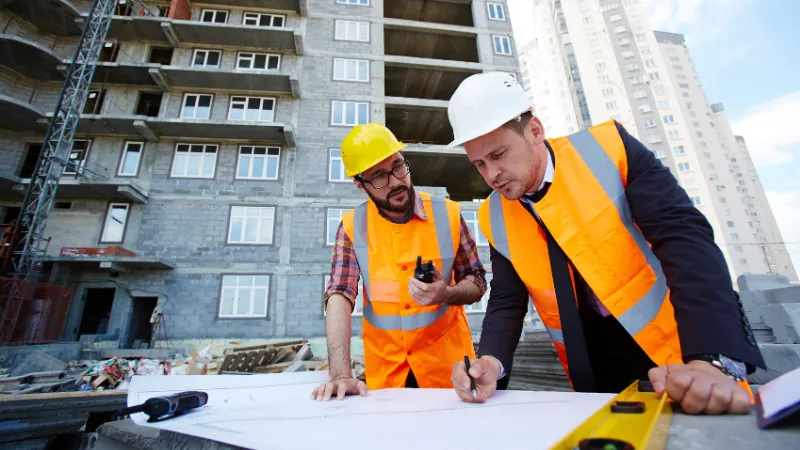
Starting a construction company in South Africa can be a great opportunity for someone with the right skills, business idea, and patience. Construction is about much more than putting up walls and laying foundations. You are helping create homes, offices, retail spaces, and other places that people use every day.
But before you start looking for your first big project, there is plenty of groundwork to do on the business side.
You need to understand your market, register your company, get your tax affairs in order, and make sure you meet the requirements that apply to construction businesses. Depending on the type of work you take on, you may also need CIDB and NHBRC registration, B-BBEE documentation, and labour-related compliance.
It can sound like a lot at first. The easiest way to handle it is to take the process one step at a time.
Here is a practical guide to help you understand how to start a construction company in South Africa in 2026.
Step 1: Conduct Market Research
Before registering your company, take some time to understand the market you want to enter.
Look at the types of construction work in demand in your area. Find out who your competitors are, what they offer, how they price their services, and which customers they target.
You should also decide what type of construction business you want to build. You could focus on residential construction, commercial projects, infrastructure work, renovations, or a more specialised area.
This decision matters because your equipment, employees, marketing, funding needs, and even the registrations you require can depend on the work you take on.
The source notes that the South African construction market was valued at around $25.1 billion, or approximately R445 billion, in 2023, with an average annual growth rate of 2% expected from 2025 to 2028. It also points to renewable energy, electricity, transport infrastructure, and industrial projects as areas expected to contribute to market growth.
Create a Business Plan
Once you understand the market, put your plans on paper.
Your business plan does not have to be complicated. It should simply give you a clear picture of where the company is going and how you plan to get there.
Include your services, target customers, competitors, pricing approach, startup costs, expected income, and financial projections.
A good business plan can also make it easier to approach banks, investors, or other funding providers because they can see how you expect the business to operate and make money.
Step 2: Register Your Construction Company
Once your research and business plan are ready, you can move on to company registration.
In South Africa, construction businesses are commonly set up as a Private Company (Pty Ltd). A sole proprietorship is another option, but a registered company provides a separate legal structure between the business and its owners.
This separation can be particularly useful as the company grows and takes on larger projects.
Being formally registered can also make your business look more professional when you approach large clients. The source notes that suppliers and government departments may require businesses to be properly registered and compliant before they can apply for certain tenders and contracts.
Your construction company registration is handled through the Companies and Intellectual Property Commission (CIPC).
At this stage, make sure the company details, directors, address, and other registration information are properly recorded.
Step 3: Understand Tax Regulations and Compliance
Registering your company is only the beginning. You also need to take care of your tax responsibilities.
South African businesses are expected to comply with the requirements of the South African Revenue Service (SARS).
The source highlights the importance of tax registration and obtaining a Tax Clearance Pin Certificate. It states that this is needed when applying for construction tenders, contracts, RFQs, funding applications, and certain public or private supplier lists.
When Do You Need VAT Registration?
According to the source, VAT registration becomes compulsory when annual turnover exceeds R1 million.
The source also notes that having a VAT number can be useful when your business wants to access construction contracts, RFQs, tenders, and supplier opportunities where VAT registration is required.
Tax compliance is something you want to stay on top of from the beginning. Falling behind can create problems when you are trying to win contracts or apply for funding.
Step 4: Get Your B-BBEE Documentation in Order
B-BBEE, or Broad-Based Black Economic Empowerment, is an important part of the South African business environment.
For construction companies looking to work with government departments or larger corporations, having the right B-BBEE documentation can be an important part of the tendering process.
Your B-BBEE status is influenced by areas such as ownership, management, and skills development.
It is worth understanding what applies to your business early rather than waiting until you find a tender you really want to pursue. Having your documents organised can make the application process much easier.
Step 5: Register Your Construction Company With CIDB
If you want to work on government construction projects or take part in major infrastructure work, Construction Industry Development Board (CIDB) registration is an important step.
CIDB registration and grading help classify contractors based on their ability and experience.
For CIDB Level 1, the source states that there are no qualifying criteria, but you need a valid Tax Clearance Certificate and must complete Central Supplier Database (CSD) registration.
For higher grades, from Level 2 to Level 9, the source lists requirements that include:
- Business registration documents
- Evidence of completed projects
- Bank statements showing payments received for completed work
Your CIDB level can become increasingly important as you target larger projects, so keep records of completed work and payments from the beginning.
Step 6: Become a Registered Builder With NHBRC
If your construction company plans to work on residential structures, NHBRC registration is another key requirement covered in the source.
The National Home Builders Registration Council (NHBRC) exists to support standards in residential construction and protect homeowners when problems arise with building work.
The source states that home builders must be registered with the NHBRC under the Housing Consumers Protection Measures Act of 1998. NHBRC registration is also described as essential for participating in government housing projects.
How NHBRC Registration Works
According to the source, the general process includes:
- Obtain the application form from the NHBRC website or an NHBRC office.
- Submit documents such as your company registration certificate, director identification, and proof of address.
- Pay the registration fee once the invoice is issued.
- Complete the required Technical Assessment.
- Pay the annual membership fee after meeting the requirements.
- Receive your NHBRC certificate once the application is approved.
The source lists a R745.61 registration fee and an annual membership fee of R526.32, while also noting that these fees can change from year to year.
Step 7: Find Funding for Your Construction Business
Construction can require a considerable amount of upfront capital.
You may need money for vehicles, tools, machinery, materials, staff, insurance, and project expenses before you receive payment from clients.
That means it is important to think about funding early.
The source highlights several options:
- Bank or institutional loans
- Government support
- Funding through organisations such as the Small Enterprise Finance Agency (SEFA)
- Private investors
Before approaching a lender or investor, make sure your business plan and financial records are ready.
You should be able to explain how much money you need, what you will use it for, and how the business expects to generate enough income to support repayments or investment.
Step 8: Follow Labour and Safety Regulations
Construction work comes with real workplace risks, so health and safety should never be treated as an afterthought.
The source recommends registering with the Department of Labour and making sure your company follows the relevant labour and safety requirements.
Important areas include the Occupational Health and Safety Act (OHSA) and compensation requirements for employees who suffer work-related injuries or illnesses under COIDA.
You should also make sure employees understand workplace safety procedures and have the equipment and training needed to perform their jobs safely.
Good safety practices protect workers, but they also help protect the business from avoidable problems and disruptions.
Step 9: Build a Strong Supplier and Contractor Network
You are unlikely to handle every part of a construction project by yourself.
Reliable suppliers and subcontractors can make a huge difference to how smoothly your projects run.
Take time to build relationships with people and companies you can trust for materials, specialist work, equipment, transport, and skilled labour.
A strong network can help you respond faster when a project comes in and reduce the risk of delays caused by unreliable suppliers or subcontractors.
Do not wait until you have a major contract before building these relationships. Start creating your network early.
Step 10: Attract Customers and Find Construction Projects
Once the business is registered and ready to operate, you need to start finding customers.
Your website is a good place to begin. Show potential clients what your company does, what areas you serve, and what makes your business different.
As you complete projects, add photographs, client testimonials, and examples of your work. These can help new customers see that your business has real experience.
Social media can also help with visibility, especially when you regularly share completed projects and updates.
Do Not Depend on One Source of Work
A construction company can find opportunities through private clients, property developers, businesses, subcontracting arrangements, and public-sector tenders.
Having more than one way to find work can help reduce your dependence on a single client or contract.
At the same time, avoid taking on projects simply because they are available. Look closely at the budget, timeline, payment terms, and resources required before accepting a job.
How Much Money Do You Need to Start a Construction Company in South Africa?
There is no single startup figure that applies to every construction company.
A small contractor focusing on renovations or residential work may have very different costs from a company planning to take on large commercial or infrastructure projects.
Your initial budget may need to cover:
- CIPC registration
- Equipment and tools
- Vehicles
- Materials
- Office expenses
- Employee costs
- Insurance
- Tax and compliance
- Marketing
- Project working capital
The biggest expense will often be related to the type and size of projects you want to handle.
Instead of choosing an arbitrary startup budget, work backwards from the services you want to offer and calculate what you actually need to deliver them properly.
Common Mistakes New Construction Businesses Should Avoid
Starting a construction company involves a lot of moving parts, and mistakes can become expensive.
One common problem is taking on projects without properly understanding the costs. A contract may look profitable on paper, but unexpected labour, material, transport, or delay costs can quickly reduce your margin.
Another issue is poor cash-flow management. Even when a project is profitable, delayed client payments can leave you struggling to cover wages and suppliers.
It is also important not to overlook compliance. Keep your registration documents, tax records, certifications, and safety paperwork organised so you are ready when a client or tender requires them.
Most importantly, do not promise more than your business can deliver. Building a good reputation takes time, while one poorly handled project can damage the trust you worked hard to build.
Conclusion
Starting a construction company in South Africa in 2026 takes more than construction skills. You also need to understand the business side of the industry.
Start by researching your market and choosing the type of construction work you want to specialise in. Then put together a realistic business plan and register your company with CIPC.
From there, focus on SARS compliance, B-BBEE documentation, CIDB registration where applicable, and NHBRC registration for residential building work. You also need to understand labour and safety requirements, secure appropriate funding, and build dependable relationships with suppliers and subcontractors.
After laying those foundations, you can concentrate on the things that really matter.
A construction company does not become successful overnight. But with proper planning, compliance, reliable people, and consistent work, you can create a business with room to grow in South Africa’s construction industry.
FAQ
How much does it cost to start a construction company in South Africa?
There is no fixed startup cost because it depends on the type and size of your construction business. You may need money for equipment, vehicles, materials, staff, insurance, registration, and project expenses.
Do I need to register my construction company with CIPC?
Yes, if you are setting up a formal company, you need to register it with the Companies and Intellectual Property Commission (CIPC). A Pty Ltd is a common structure for construction businesses.
What business structure is best for a construction company?
A Private Company (Pty Ltd) is commonly used because it creates a separate legal structure for the business. A sole proprietorship is another option, but it does not provide the same separation between the owner and the business.
Do I need a Tax Clearance Pin for a construction company?
The source states that a Tax Clearance Pin Certificate is required for construction tenders, contracts, RFQs, funding applications, and certain supplier lists. Keeping your SARS compliance in order is therefore important.
When does a construction company need to register for VAT?
According to the source, VAT registration becomes compulsory when annual turnover exceeds R1 million. Having a VAT number may also be required for some construction tenders and contracts.
What is B-BBEE and why does it matter in construction?
B-BBEE can be important when a construction company wants to work with government departments or large corporations. Your standing is influenced by areas such as ownership, management, and skills development.
Does a construction company need CIDB registration?
If you want to compete for government construction projects and infrastructure work, CIDB registration and grading are important. The source says CIDB Level 1 requires valid tax clearance and CSD registration.
What do I need for CIDB registration?
For higher CIDB grades, the source lists business registration documents, proof of completed projects, and bank statements showing payments received for completed work.
Is NHBRC registration required for builders in South Africa?
The source states that builders working on structures, particularly homes, must register with the National Home Builders Registration Council (NHBRC). It also identifies NHBRC registration as important for government housing projects.
How much does NHBRC registration cost?
The source lists an NHBRC registration fee of R745.61 and an annual membership fee of R526.32. It also notes that these fees can change annually.
How can I fund a construction business in South Africa?
You can look at bank loans, government support programs such as SEFA, or private investors. Having a strong business plan and organised financial records can help when applying for funding.
But before you start lookin