



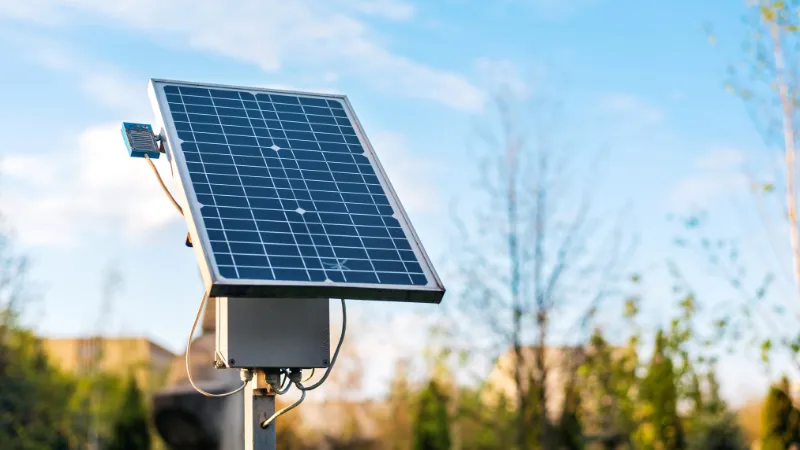
Acumen’s Hardest-to-Reach (H2R) Catalyze program invested $5 million in the Zambian unit of off-grid solar startup Sun King. This is the first time Sun King has invested directly in one of its country-level firms. The funds will be used to fund Sun King’s statewide rollout in Zambia, as well as to assist the company in obtaining local-currency loans from Zambian lenders, allowing it to expand beyond Acumen’s cheque.
T. Patrick Walsh and Anish Thakkar founded Sun King in 2007, which produces and distributes solar kits and appliances (lights, fans, and televisions) to off-grid households and small businesses. Its product line includes everything from basic lights and phone charging kits to multi-kilowatt inverter systems capable of powering big residences, companies, schools, and healthcare facilities. Customers buy on a 12- to 24-month loan, paying daily, weekly, or monthly with mobile money starting at $0.26 per day. Greenlight Planet Zambia launched in 2021.
According to the World Bank, nearly half of Zambians still lack electricity, with rural availability at 33%. Acumen further stated that severe droughts in recent years have reduced hydropower generation, which accounts for 80% of the country’s electricity. Acumen expects the investment will help Sun King reach roughly 5.6 million people over five years, including up to 4.5 million Zambians who will receive energy for the first time.
Sun King CFO Krishna Swaroop stated that the company has witnessed high unmet demand for inexpensive solar in communities where the power has not yet reached, and that Acumen’s investment provides it with the capital and confidence to continue expanding across the country. Sandra Halilovic, head of H2R Catalyze, said Sun King’s track record in other countries gave Acumen confidence that its model could scale swiftly in Zambia, and that the transaction was intended to collect local-currency debt from Zambian institutions.
The rise occurs after larger group-level rounds. Sun King raised $40 million in equity from Lightrock in 2025, followed by $260 million in a Series D in May 2022, which was sponsored by General Atlantic’s BeyondNetZero climate fund. It operates in a tighter market: VC funding for solar fell 40% year on year to $1.5 billion in the first half of 2026.