



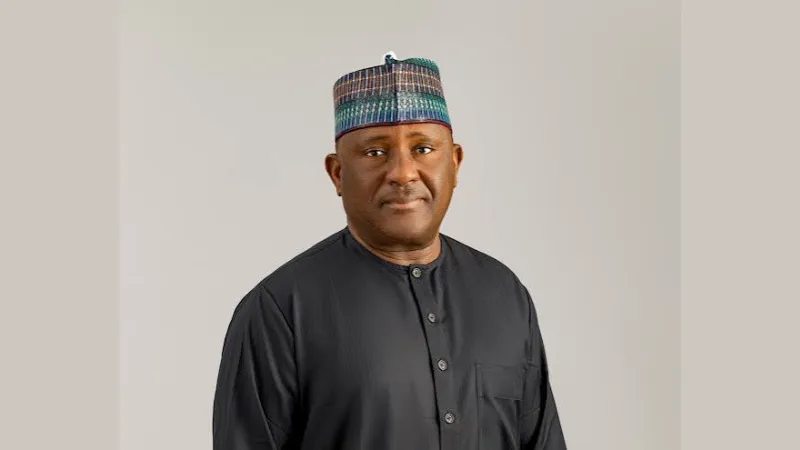
When people search for BUA net worth in 2026, they are usually talking about the fortune of Abdulsamad Rabiu, the Nigerian billionaire behind BUA Group. His wealth has grown dramatically over the past few years.
According to Forbes’ 2026 Africa list, Abdulsamad Rabiu’s approximate net worth is $11.2 billion, which makes him the third-richest person in Africa.
That number tells only part of the story. Rabiu’s rise is closely tied to the way he built BUA Group from a trading business into a diversified industrial empire with major interests in cement, sugar, food production, and real estate.
BUA Net Worth in 2026
| Detail | Information |
| Abdulsamad Rabiu net worth 2026 | $11.2 billion |
| Africa ranking | #3 |
| Country | Nigeria |
| Main source of wealth | Cement and sugar |
| Company | BUA Group |
| Major listed businesses | BUA Cement and BUA Foods |
| Business founded | 1988 |
| Business model | Diversified manufacturing and industrial conglomerate |
How Did Abdulsamad Rabiu Build His Wealth?
Rabiu’s story isn’t simply about owning a large company. It is about gradually moving from trading into manufacturing and controlling more of the supply chain.
He started BUA International in 1988, initially dealing in commodities such as rice, sugar, fertilizer, and other products. But he quickly noticed a problem with pure import trading: when everyone rushed into the same product, prices could swing sharply and wipe out margins.
Instead of continuing to compete purely on imports, Rabiu began looking for ways to add value locally.
That meant processing raw materials rather than simply importing finished products.
This strategy eventually took BUA into areas such as edible oils, flour, sugar and, most importantly, cement.
BUA’s Cement Business Is a Major Part of His Fortune
Cement became one of the biggest engines behind Rabiu’s wealth.
BUA expanded its cement operations through acquisitions, new plants and capacity investments. A particularly important step came from the consolidation of Rabiu’s cement interests with the Cement Company of Northern Nigeria, creating what became BUA Cement Plc.
Today, BUA Cement is one of the most important assets associated with Rabiu’s fortune. Forbes says Rabiu owns approximately 98.2% of BUA Cement.
The cement strategy also fits naturally with Rabiu’s broader philosophy: Nigeria has a huge need for infrastructure, housing and construction materials, so producing cement domestically gives BUA access to a large underlying market.
BUA Foods Adds Another Major Wealth Engine
Cement isn’t the only reason Rabiu is wealthy. His other major listed business is BUA Foods, which operates across Nigeria’s food and agricultural value chain.
Rabiu owns approximately 95% of BUA Foods, according to Forbes. The company gives the BUA empire exposure to everyday consumer demand rather than relying entirely on construction and infrastructure.
That diversification is important. Cement can be heavily influenced by construction cycles and infrastructure spending, while food products are linked to everyday consumption.
Why Did Abdulsamad Rabiu’s Net Worth Jump in 2026?
The increase in Rabiu’s fortune is striking. Forbes’ 2026 Africa ranking says his wealth rose by $6.1 billion, or approximately 120%, taking him to $11.2 billion.
A significant part of billionaire wealth comes from ownership stakes in publicly traded companies. When the market value of those companies rises, the estimated value of the owner’s stake rises as well.
That means a billionaire’s net worth isn’t the same thing as cash sitting in a bank account.
For Rabiu, the value of his substantial holdings in BUA’s listed businesses is particularly important when Forbes calculates his fortune.
The Business Philosophy Behind BUA’s Growth
One of the most interesting parts of Rabiu’s story is his preference for value addition.
Rather than simply buying products and reselling them, BUA increasingly moved toward processing and manufacturing.
That strategy can create several advantages:
- Greater control over production
- More control over the supply chain
- Less dependence on finished-product imports
- Potentially stronger margins
- Greater control over product availability
- Opportunities to build large-scale manufacturing capacity
From Trader to Industrialist
The transformation of BUA is perhaps the most important part of understanding Rabiu’s wealth.
He started with commodity trading.
Then came processing.
Then manufacturing.
Then large-scale industrial investments.
Then publicly traded companies.
That progression allowed Rabiu to capture more value at different stages of the supply chain.
It’s also why describing him simply as a “cement billionaire” doesn’t tell the whole story.
His fortune is connected to a broader industrial ecosystem built around BUA’s businesses.
What Companies Does Abdulsamad Rabiu Own?
The BUA empire includes several businesses and investments, but the two publicly listed companies most closely associated with Rabiu’s wealth are:
BUA Cement
BUA Cement is one of Nigeria’s major cement producers. Rabiu has a controlling stake of about 98.2%, according to Forbes.
The company represents the industrial and infrastructure side of his empire.
BUA Foods
BUA Foods is the group’s major publicly traded food business. Rabiu owns about 95% of the company, according to Forbes.
Its presence gives the wider BUA group exposure to food manufacturing and consumer demand.
BUA Group
At the top sits BUA Group, the privately controlled conglomerate founded by Rabiu.
Its interests have historically extended across areas including cement, sugar, food production, real estate, and infrastructure-related activities.
Is Abdulsamad Rabiu Self-Made?
Forbes describes Rabiu as self-made, although his family background clearly played a role in his early exposure to business.
His father, Isyaku Rabiu, was an established Nigerian businessman. Abdulsamad Rabiu nevertheless developed his own business operations and eventually built BUA into a major industrial group.
His journey is a typical “started with nothing” billionaire story. A more accurate description is that he used an existing business background and turned it into a much larger industrial empire through strategic expansion and investment.
What Makes Abdulsamad Rabiu Different From Other Billionaires?
Rabiu’s approach has generally been less about flashy consumer brands and more about industrial infrastructure.
His businesses operate in sectors that sit behind everyday economic activity.
Just think about it:
- A new building needs cement.
- Factories need raw materials.
- Consumers need food.
- Sugar needs processing.
- Infrastructure requires construction materials.
By concentrating on these fundamentals, BUA has positioned itself in parts of the Nigerian economy where demand can remain substantial for decades.
Conclusion
Abdulsamad Rabiu’s net worth is approx $11.2 billion as per Forbes’ 2026 Africa list. Most of his wealth comes from BUA Cement and BUA Foods.
But the more interesting story is how he got there. Rabiu moved from commodity trading into processing, manufacturing, and large-scale industrial production. That strategy transformed BUA from a trading operation into one of West Africa’s major business groups.
FAQ
What is Abdulsamad Rabiu’s net worth in 2026?
Forbes estimates Abdulsamad Rabiu’s 2026 net worth at $11.2 billion on its Africa billionaires ranking.
Is Abdulsamad Rabiu the owner of BUA Group?
Yes. Rabiu is the founder and controlling figure behind BUA Group, which has major interests in cement, food, sugar, and other industries.
What is Abdulsamad Rabiu’s main source of wealth?
His primary sources of wealth are cement and sugar, although his business interests are more diversified than those two sectors alone.
How did Abdulsamad Rabiu become rich?
He started in commodity trading and gradually moved into processing, manufacturing, and large-scale industrial businesses, particularly cement and food production.
Why did Abdulsamad Rabiu’s wealth increase so much in 2026?
Forbes reported that his fortune increased by approximately $6.1 billion, with the rise linked largely to the value of his business holdings.
Is BUA a Nigerian company?
Yes. BUA Group is a Nigerian conglomerate founded by Abdulsamad Rabiu and headquartered in Nigeria.