



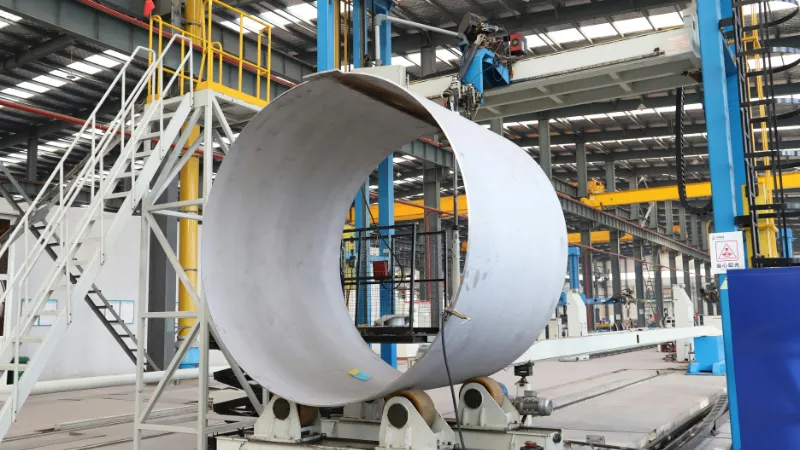
Steel may not be something most people think about every day, but it is behind much of Africa’s economic growth. The buildings going up in major cities, new roads and bridges, factories, power projects, transport infrastructure, and even everyday manufactured products all depend on steel in one form or another.
That is why Africa’s steel industry is becoming increasingly important.
The market reached around 39.24 million tons in 2025 and is expected to grow at a 3.40% CAGR from 2026 to 2035, potentially reaching 54.82 million tons by 2035. That projected growth reflects a broader story across the continent: more infrastructure, more industrial activity, and greater interest in producing and processing materials locally.
But there is another side to the story.
Africa is not simply trying to produce more steel. Many countries and companies are looking for ways to add more value locally. Instead of exporting raw materials and importing finished products, manufacturers are investing in processing facilities, technology, recycling, and finished steel products.
That shift could have a major impact on jobs, industrial development, supply chains, and the competitiveness of African businesses.
With that in mind, here are seven steel manufacturers and major industry players worth knowing in 2026.
Africa’s Steel Industry in 2026: What Is Changing?
Africa’s steel sector is being shaped by several forces at the same time.
Construction remains one of the biggest sources of demand. As cities expand and governments invest in roads, railways, housing, ports, energy infrastructure, and other large projects, the need for steel naturally rises.
Industrialisation is another important factor.
Manufacturing companies need steel for machinery, buildings, equipment, vehicles, and countless other applications. As more industries develop locally, demand for reliable steel supplies can increase.
There is also a growing push toward value-added production.
African manufacturers are increasingly looking beyond basic steelmaking and investing in downstream processing. The goal is fairly straightforward: turn more of the continent’s raw materials into useful finished products locally.
That can mean more jobs, stronger domestic supply chains, less reliance on imports, and more economic value staying within African markets.
South Africa remains the continent’s biggest steel producer, while Egypt, Nigeria, and Algeria are also important players.
Import steel, global competition, energy costs, weak domestic demand in some markets, and older production facilities can put significant pressure on manufacturers.
Against this backdrop, these seven companies stand out for different reasons.
1. POSCO International
POSCO International is not headquartered in Africa, but it is still an important name to consider when examining the continent’s broader steel supply chain.
The company has a global business presence and works across areas including steel, food, and energy. Steel remains an important part of its international activities, including the supply of raw materials and steel scrap.
The company has also placed an emphasis on sustainability and environmentally conscious steel products.
Why POSCO International is worth watching
For African businesses, global steel companies such as POSCO International matter because the steel market does not operate within national borders.
Technology, investment, finished goods, raw resources, and scrap can all be transported between nations. International businesses may play a significant role as partners in that wider supply chain as Africa builds its own steel production capabilities.
2. Acerinox
Acerinox is one of the major global stainless-steel manufacturers in the country; it has a very strong presence in the African market.
The company operates across stainless steel and high-performance alloys, serving customers in a wide range of industries. Its manufacturing network and broad product portfolio give it exposure to markets where durability and corrosion resistance are especially important.
Acerinox is also identified as a leading stainless-steel producer in Africa.
Why Acerinox matters
Not every steel application requires the same material.
Stainless steel is particularly valuable where resistance to corrosion, durability, and long-term performance matter. That makes it relevant to everything from construction and infrastructure to industrial equipment and consumer products.
As African economies become more industrialised, demand may increasingly shift from basic steel products to specialised, higher-value materials.
That makes companies with strong stainless-steel capabilities particularly interesting from a business perspective.
3. Nippon Steel Corporation
Nippon Steel is one of Japan’s best-known steelmakers and one of the major names in the global industry.
Its business is broader than steel production alone. The company operates in steelmaking and fabrication, engineering and construction, chemicals and materials, and system solutions.
It also has manufacturing operations outside Japan, giving it an international footprint.
Why Nippon Steel matters to Africa
Africa’s industrial development will require more than raw steel.
As countries build factories, transportation networks, energy infrastructure, and engineering projects, they also need technical expertise, manufacturing capabilities, and specialised materials.
That is where global steel companies with diversified industrial operations can become relevant.
Nippon Steel’s combination of steel, engineering, materials, and technology illustrates how modern steel businesses can operate across multiple parts of the industrial value chain.
4. African Industries Group
African Industries Group is one of the most directly connected companies to Africa’s industrial growth story.
Based in Nigeria, the diversified group operates across several sectors, including iron and steel, building materials, mining, steel processing, aluminium products, industrial glass, and other manufacturing activities.
The company has around 35 manufacturing plants and facilities across Nigeria, according to the source material.
Why African Industries Group matters
Nigeria has a huge long-term need for infrastructure, construction, housing, and industrial development.
That creates a natural demand for locally produced materials.
Domestic manufacturing can also help reduce dependence on imported products while creating additional activity across factories, transportation, suppliers, engineering, and other supporting businesses.
African Industries Group is particularly interesting because it does not treat steel as a standalone business. Its activities extend into several connected industrial areas.
That type of diversification can be valuable in a market where companies are trying to capture more value from local resources and build stronger supply chains.
5. Egyptian Steel Group
Egypt is one of Africa’s important steel-producing countries, and Egyptian Steel Group is one of the companies contributing to its steel industry.
The group focuses on producing steel products that meet local and international standards. It has also pursued an export strategy, looking beyond Egypt’s domestic market.
Why Egyptian Steel Group matters
The company’s approach reflects an important opportunity for African manufacturers.
Local demand is obviously important, but a competitive manufacturer can also use its production capacity to serve customers in other countries.
That is particularly relevant as trade and industrial connections across Africa continue to develop.
Companies that can produce consistent-quality products, control costs, and build reliable distribution networks could be better positioned to compete both at home and abroad.
6. El Marakby Steel
El Marakby Steel is another Egyptian steel producer with a strong focus on product quality and manufacturing processes.
One of the company’s important areas of focus is its melt shop, where controlling the chemical composition of steel helps determine the quality and grade of the finished material.
The company also highlights sustainable technology and resource conservation.
Why El Marakby Steel matters
For steel buyers, quality is not a minor issue.
Construction companies, manufacturers, engineers, and infrastructure developers need materials that meet specific technical requirements. If a manufacturer cannot deliver consistent quality, it becomes difficult to build long-term relationships with industrial customers.
This is why production control can become a genuine competitive advantage.
El Marakby’s focus on quality and resource efficiency also reflects a wider direction for Africa’s steel industry: competing not only on how much steel can be produced, but on how efficiently and reliably it can be produced.
7. Libyan Iron and Steel Company
The Libyan Iron and Steel Company, commonly known as Libyan Steel, is another major industrial player worth watching.
The company operates on a large industrial site near Misrata and has a design capacity of approximately 1.7 million tons of liquid steel annually.
Its production system includes direct-reduction facilities, steel melt shops, bar and rod mills, and other rolling facilities.
One particularly notable feature is its use of locally sourced natural gas in the direct reduction of iron pellets.
Why Libyan Iron and Steel matters
The company offers an interesting example of how natural resources can be connected to domestic industrial production.
Rather than simply exporting resources, countries can potentially create more economic value by processing them locally.
That can support manufacturing, create jobs, develop technical skills, and generate activity for suppliers and other businesses around the main production facility.
For Africa, that idea is particularly important as governments and businesses seek to strengthen domestic industrial capacity.
Why Steel Manufacturers Matter to Africa’s Business Economy
It is easy to look at steel production figures and forget that steel supports a much larger business ecosystem.
Think about what is required to build a new factory.
You need structural steel, machinery, transport, engineering, construction workers, electrical systems, logistics, and numerous suppliers.
A major road or bridge project creates a similar chain of demand.
This is why steel production can have an impact far beyond the steel plant itself.
A stronger domestic steel sector can support:
- Construction companies
- Engineering firms
- Mining businesses
- Transport and logistics companies
- Equipment manufacturers
- Fabricators
- Infrastructure developers
- Energy projects
- Local suppliers and contractors
The more of this activity that happens locally, the greater the potential economic impact.
The Push Toward Local Value Addition
Perhaps the most important development in Africa’s steel industry is the push to process more resources locally.
Africa has significant natural resources, but exporting raw materials and importing finished products can limit the economic value created within the continent.
Local steel processing changes that equation.
When raw materials are processed domestically, businesses can potentially create additional jobs, develop technical skills, build manufacturing capacity, and supply local industries more efficiently.
It also creates opportunities for companies further down the supply chain.
For example, a steel manufacturer can supply a local fabricator, which can then provide components to a construction company or infrastructure project.
That is how one industrial investment can create activity across several businesses.
Infrastructure Could Drive More Steel Demand
Africa’s infrastructure requirements remain substantial.
New roads, bridges, rail systems, housing developments, ports, industrial parks, power projects, and commercial buildings all require steel.
As these projects move forward, steel manufacturers could see additional demand for products ranging from reinforcing steel to structural products and specialised materials.
But higher demand does not automatically guarantee higher profits.
Manufacturers still need to manage production costs, energy expenses, logistics, raw-material prices, competition, and financing.
In other words, the opportunity is large, but execution matters.
The Challenges Facing Africa’s Steel Industry
The outlook for African steel is positive in many respects, but there are serious challenges underneath the growth story.
South Africa provides a useful example.
In February 2025, ArcelorMittal South Africa announced plans to stop long-steel production by April 2025. The company cited weak domestic demand, competition from local scrap-based mini-mills, and Chinese imports among the pressures affecting the business.
The proposed changes raised concerns about approximately 3,500 direct and indirect jobs.
This is an important reminder that steel manufacturing is a capital-intensive business.
A plant may have significant production capacity, but if demand is weak or operating costs are too high, that capacity does not necessarily translate into sustainable profits.
For African manufacturers, remaining competitive may depend on investment in modern technology, efficient production, reliable energy supplies, quality control, and strong local and regional distribution.
What to Watch in Africa’s Steel Market in 2026
For businesses and investors, production volume is only one part of the story.
Several other developments could shape the industry over the coming years.
Local manufacturing
Countries are increasingly interested in producing more finished products domestically. This could create new opportunities for steel manufacturers and downstream businesses.
Infrastructure spending
More construction and infrastructure investment generally means more demand for steel.
Steel recycling
Scrap steel and recycling could become increasingly important as manufacturers seek to reduce resource use and improve production efficiency.
Technology
Modern technology can help manufacturers improve productivity, control quality, reduce waste, and lower operating costs.
Regional trade
A manufacturer that can serve customers across multiple African markets may have an advantage over one that depends entirely on a single domestic market.
Sustainability
Steel production is energy-intensive, so efficiency and environmental performance are becoming increasingly important business considerations.
The Business Outlook for African Steel Manufacturers
Africa’s steel story in 2026 is ultimately one of industrialisation.
The continent has natural resources, a growing population, expanding cities, infrastructure requirements, and increasing demand for locally manufactured goods. Steel sits at the intersection of many of these trends.
The companies highlighted above represent different approaches to the industry.
Some have a global footprint. Others are closely tied to domestic African manufacturing. Some focus on stainless steel and specialised products, while others operate large integrated steel facilities.
What they have in common is that steel remains closely connected to Africa’s broader economic ambitions.
The market’s projected growth from 39.24 million tons in 2025 to 54.82 million tons by 2035 suggests a significant long-term opportunity. But the companies that benefit most will likely be those that can combine production capacity with competitive costs, reliable quality, modern technology, strong distribution, and an ability to respond to changing customer needs.
Conclusion
Africa’s steel industry is entering an important period.
Infrastructure development and industrialisation are creating new opportunities, while international competition and operating costs are forcing manufacturers to become more efficient.
For businesses, investors, construction companies, and industrial buyers, keeping an eye on the leading steel manufacturers can provide useful insight into where Africa’s broader industrial economy is heading.
The bigger opportunity, however, may lie beyond steel itself. As Africa moves toward greater local manufacturing and value addition, companies capable of turning raw materials into higher-value products could play an increasingly important role in the continent’s economic future.
FAQ
Which country is the biggest steel producer in Africa?
South Africa is identified in the source material as Africa’s largest steel producer. Egypt, Nigeria, and Algeria are also important steel-producing markets.
How large is Africa’s steel market in 2026?
The African steel market reached approximately 39.24 million tons in 2025 and is projected to grow at a CAGR of 3.40% from 2026 to 2035.
What could Africa’s steel market reach by 2035?
Based on the source’s projection, the market could reach approximately 54.82 million tons by 2035.
Why is local steel production important for Africa?
Local production can help reduce reliance on imported finished products, create employment, strengthen domestic supply chains, and allow countries to capture more value from their natural resources.
What industries depend heavily on steel?
Construction, infrastructure, manufacturing, engineering, mining, transport, energy, and industrial development all rely heavily on steel.
What are the biggest challenges for African steel manufacturers?
Manufacturers face several challenges, including imported competition, weak domestic demand in some markets, high production and energy costs, global competition, and the need to modernise older facilities.